
COVID-19 was one of the leading causes of death in the United States during much of the pandemic, even for younger age groups, according to a new analysis.
The results, which were published July 5 in
On July 1, the United States was averaging 244 COVID-19 deaths per day, according to the Johns Hopkins Coronavirus Resource Center — much lower than earlier pandemic peaks of thousands of deaths per day.
But experts say with the availability of COVID-19 vaccines, boosters and treatments, as well as public health measures such as masking and improved ventilation, this is still a high price to pay for a “return to normal.”
“This is something that we would have thought was inconceivable a couple of years ago — that we would have a new disease that’s been killing people at that rate,” said Michael Stoto, PhD, a statistician, epidemiologist, and health services researcher at Georgetown University in Washington, D.C.
“This also concerns me because these deaths are now largely preventable,” added Stoto, who was not involved in the new research.
In the new analysis, researchers from the National Cancer Institute (NCI) examined federal death certificate data from March 2020 through October 2021. Researchers also looked at provisional data for 2021 from the Centers for Disease Control and Prevention (CDC).
This does not include the Omicron waves, because data from that time was not yet complete when researchers did their analysis.
During the time period of the study, COVID-19 was the third leading cause of death overall — accounting for almost 1 in 8 deaths in the United States.
In the top two spots were heart disease and cancer, with accidents and stroke following behind COVID-19.
The leading causes of death were the same in both 2020 and 2021. The number of deaths also increased between those two years for all age groups older than 1 year.
While older adults have a higher risk of dying from COVID-19, the NCI researchers found that COVID-19 was among the top five leading causes of death for all age groups 15 years and older.
For age groups 55 years and older, it was among the top three, which fits with the higher risk faced by older adults.
Among people 85 years and older, though, COVID-19 dropped from the second leading cause of death in 2020 to the third leading cause of death in 2021.
This trend was “perhaps driven by higher COVID-19 vaccination rates in 2021 in the oldest age groups,” the researchers wrote.
While people who are vaccinated against the coronavirus that causes COVID-19 can still get infected, being vaccinated reduces the risk of severe illness and death.
For other age groups, COVID-19 moved up the rankings as the pandemic progressed.
Among 45- to 54-year-olds, COVID-19 was the fourth leading cause of death in 2020, but the top cause of death in 2021.
In addition, COVID-19 went from the fifth leading cause of death among 35- to 44-year-olds in 2020 to the second leading cause of death in 2021.
Even younger age groups were impacted by COVID-19 — it was the fourth leading cause of death in 2021 among both 25- to 34-year-olds and 15- to 24-year-olds.
The deaths counted in this research are those attributed directly to COVID-19. However, coronavirus infection may have had a wider impact on the risk of dying.
According to NCI researchers, the pandemic may have also indirectly led to increases in other causes of death such as:
One possible explanation could be attributed to people avoiding healthcare for chronic conditions during the pandemic, the researchers suggest.
However, the coronavirus has also been found to affect multiple organs, including the lungs, heart, kidney, liver, brain, and gastrointestinal tract.
As a result, coronavirus infection may increase a person’s risk of developing diabetes and
The new study focused on overall COVID-19 deaths in the United States. But other research has found that these deaths were not evenly distributed throughout the country.
In a study published April 28 in
In particular, between May 2020 and September 2021, COVID-19 mortality in the South was 48 percent higher than the national rate, even though this region only accounts for 38 percent of the country’s population.
By contrast, the Northeast’s COVID-19 mortality rate during this period was 42 percent lower than the national rate.
The Northeast did have a higher mortality rate at the start of the pandemic when the New York City area was hit hard by the at-the-time “novel” coronavirus.
In this study, Stoto and his colleagues looked at excess mortality rather than reported deaths — the numbers that show up on public health dashboards. Excess mortality is how many extra deaths happened than would be predicted to occur based on previous years.
Reported COVID-19 deaths sometimes
In addition, by using excess mortality, Stoto and his colleagues were able to estimate how accurately regions were counting COVID-19 deaths — again, there was wide variation in different parts of the country.
“After the first couple of months, the Northeast had lower [COVID-19 mortality] rates, and also were counting the COVID deaths pretty comprehensively,” said Stoto.
“In the South, which is the other extreme, they had both higher rates [of mortality] and they were less likely to count them as COVID deaths,” he said.
Stoto said it will be important to continue looking at excess mortality, especially when trying to see how well the COVID-19 boosters protect different age groups against dying.
“[Excess mortality] is still relevant going forward because the COVID deaths are likely to continue to be underreported in the South,” he said.
While vaccines can save lives, Stoto’s research suggests that differences in COVID-19 mortality existed even before the vaccines were authorized by the Food and Drug Administration (FDA).
“What we showed is that many of these deaths could have been prevented before the vaccine became available, through masking and distancing and things like that,” he said.
With the coronavirus not going away anytime soon, Stoto expects to see continued differences in COVID-19 mortality among regions, due in part to variations in booster uptake.
Several states lag behind in how many people have received their first booster. These include:
“Now so much of [COVID-19 mortality] is preventable by vaccines,” Stoto said. “But we live in a country where a lot of people have given up on the vaccine, and it’s killing an unprecedented number of people.”
Scientists around the world are working on a number of vaccines and treatments for COVID-19.
New research has found that the Omicron variant of COVID-19 carries significantly less risk of causing long COVID than the Delta variant of COVID-19…
Paxlovid has proven to be effective in preventing serious illness with COVID-19 and now there is plenty of supply at pharmacies
While facial paralysis has been reported after COVID-19 vaccination, it’s an extremely rare occurrence. In fact, there's a higher risk of facial…
As of July, the COVID-19 Omicron subvariant BA.5 has emerged as the dominant strain in the United States and currently accounts for more than 53% of…
Brain fog as a side effect of COVID-19 tends to gradually improve over time. But it's still possible to experience brain fog symptoms months or years…
N95s and KN95s masks, called respirators, are the gold standard for blocking out viruses in 2022. We’ve rounded up the 10 best masks.
After one-and-a-half years, and many coronavirus variants, the COVID-19 vaccines are finally getting an update, the FDA announced on June 30.
Some patients who have taken Pfizer Inc.’s oral antiviral Paxlovid are reporting that their COVID-19 symptoms returned after initially improving when…
Episcleritis is inflammation of your eye's clear outer coating. Some people with ankylosing spondylitis (AS) experience this or other eye symptoms.
OUR BRANDS
COVID-19
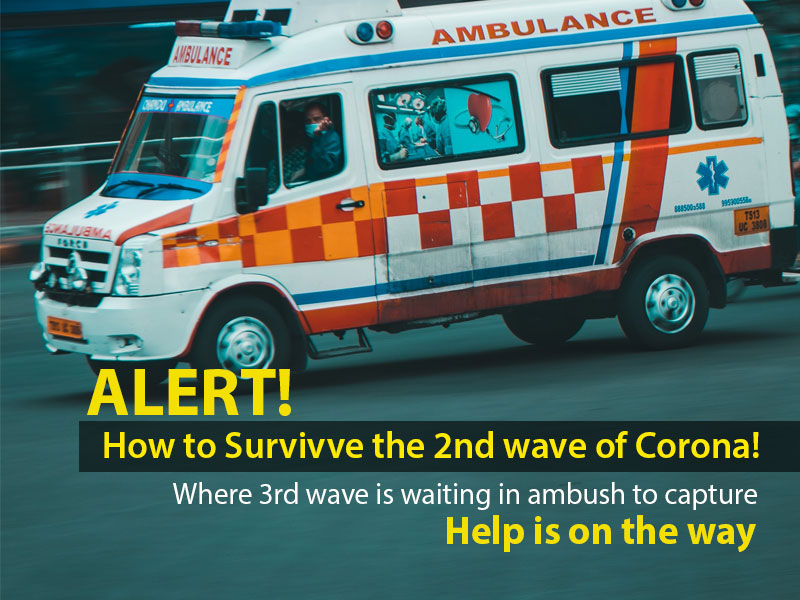
Surviving The 2nd Wave of Corona
‘This too shall pass away’ this famous Persian adage seems to be defeating us again and again in the case of COVID-19. Despite every effort