Overnight, a young woman’s personality shifts, plunging her into a months-long medical mystery.  Verified by Psychology Today
Posted March 8, 2022 Reviewed by Michelle Quirk
I had the pleasure of speaking with George Woods, Monique LeNoir, and Tyrell Zimmerman of the African-American Wellness Project based in Baltimore, Maryland. We discussed the project’s mission, institutional racism, the impact of trauma on children, and health disparities in the African-American community.
ML: Tell me about your roles within the project and what got you interested in starting the African-American Wellness Project?
MLN: I am the executive director. The organization was founded in 2002 by my dad, Dr. Michael LeNoir, to address health disparities in the Black community. He’s always been very passionate about this. Our mission is to teach African-Americans how to advocate for themselves, and to empower them with the tools and resources they need. This organization is for us, by us. We work every day to make sure African-Americans are armed with all the information they need.
ML: George, what do you do within the project?
GW: I’m the psychiatric consultant. I started working on issues of wellness and mental disorders. It’s important to address stigma within the African-American community, as well as the relationships they may have to institutions. There may be ways we can move institutions around issues of stigma, and we certainly can move ourselves. We aim at talking to people of color making sure they understand symptoms and not shy away from our needs and health.
ML: When you say “institutions,” are you including criminal justice, legislature, schools, churches and places of faith?
GW: I am, but also including the institution of white culture. All of those are fed by the institution of white culture. We can continue to turn to our allies and advocates within all of those institutions. We are also confused by their deeds and their agendas. I think what Dr. LeNoir has done beautifully over the last four years is to make sure we empower ourselves, so we understand our needs and are able to educate all key institutions.
ML: Tyrell, what are you spearheading as a member of the board?
TZ: I’m very proud as an advisory board member. I introduce my network and resources alongside AAWP.
MLN: He’s also authored a book on mental health awareness for children.
TZ: I authored my book Carter: My Dream, My Reality to give kids a tool. Mental health can be stigmatized because we don’t have the right tools or resources. Children and adults can have guided discussions around traumatic events. Children suffer and we meet and treat those needs as they become older, but sometimes it’s too late.
ML: What are some of the most entrenched stigmas in the Black community surrounding mental illness?
GW: I think some of the stigmas start with the question, “How can it help me? How will mental health put food on the table, or get me a job?” Mental health is seen as a luxury rather than the real foundation of health. If you can’t feel good about yourself, you can’t feel good about your body or your children. What we’re trying to do is change the view of mental health from pathology to potential.
MLN: I think there’s also a stigma around seeking help. A lot of people in the Black community are shunned for seeking help.
GW: We also have to acknowledge the way mental health has been structured in medical training. The Black body and Black mind have not been approached in ways that benefit mental health. We have to somehow separate out the true stigma from the reality of racism, but that doesn’t mean we have to look to someone else to understand. I want to make it clear that one of the main reasons I joined AAWP is the focus on children. Much of my work has been in the correctional system, talking with people on death row. I’ve talked with teachers who knew these inmates when they were five, six, seven years old. The impact on their life by the time they’re seven, eight, nine years old is so great that it’s almost impossible to shake and to reshape. What Tyrell is saying is to start very young and make that model of health, wellness, and potential rather than pathology.
ML: How have you countered misconceptions and stigmas, and what’s been most successful?
MLN: We meet people where they are on our social media channels and we send out a weekly newsletter. Dr. LeNoir sends out an ethnic health report where he weighs in on articles with an expert opinion. Our Web site has a software system called Healthwise where people can enter health conditions and find resources.
GW: Social media platforms are the way to get to the community and, ironically, to gain trust. Dr. LeNoir has been able to build trust. Before you can intervene in health, you build trust, which enables you to talk about other more delicate and complex issues.
MLN: We bring the experts to our community through Facebook Live and podcasts.
TZ: You want trust built into the relationship for your health and the stigmas around mental health. You want your information coming from a trusted source and from someone you can relate to.
GW: Tyrell’s book talks about trauma in children. One of the things we’re aiming to do is to establish trust and be trustworthy. When you talk about mental health, even today, not as a function of institutional racism, but also of poor science, you see practices continuing that are suspect, at best. One of our roles through focus groups is to separate the wheat from the chaff. When a psychiatrist prescribes a medication, what can a patient expect? What are the roles of certain medications? Not all medications solve all the problems. We have to be clear that there are alternatives.
ML: In terms of science and stigma, do superstitions persist, where a mental illness is misunderstood as a demonic possession?
GW: I’m working on a case right now in Washington with a person from Louisiana. Is it voodoo or is it mental health? When we bring up these issues, we have to be very careful that we’re focusing on a person’s culture and that we’re not denigrating a cultural belief in the face of “scientific evidence.” When I finished my fellowship in psychopharmacology, we knew there were positive symptoms in terms of psychosis: hallucinations and delusions. Now, 35 years later, we know there are negative symptoms: problems of motivation and language. We know there are cognitive symptoms. Antipsychotic medications do not speak to negative or cognitive symptoms. We’re still treating people with antipsychotic medications based on one of three complexes. The question is, “Who’s zooming who?” As practitioners, we need to understand how the science works, but also the culture of the patient. If you’re in Kentucky and someone’s talking about handling snakes, you’re not going to laugh at them or call them delusional. If you’re treating them in San Francisco, you might have some question about it. Culture means everything. You’re talking about immigrant populations, but also African Diaspora. You’re talking about Sudanese, Nigerian, and multiple African cultures. You can go from Louisiana to Mississippi to Oklahoma and find very unique cultural differences.
MLN: AAWP has been working on these issues for years and revitalized our organization because so many families have suffered through the pandemic. Our goal is to address disparities.
TZ: I cannot stress enough the importance of having the resources and awareness for children. I grew up in a dangerous environment: drugs, violence, and murder. I’ve seen every experience imaginable for a young Black boy. I was able to move forward. So many others didn’t have anyone to meet them where they were. I’m excited about the project. If we can impact the youth when the trauma is taking place, we have a better chance of helping them.
ML: Thank you all for joining me. Readers, learn more about African-American Wellness Project here.
Mackenzie Littledale lives in South Florida with a bipolar diagnosis. She is a certified developmental editor and author of contemporary adult fiction.
Get the help you need from a therapist near you–a FREE service from Psychology Today.
Psychology Today © 2022 Sussex Publishers, LLC
Overnight, a young woman’s personality shifts, plunging her into a months-long medical mystery.
COVID-19
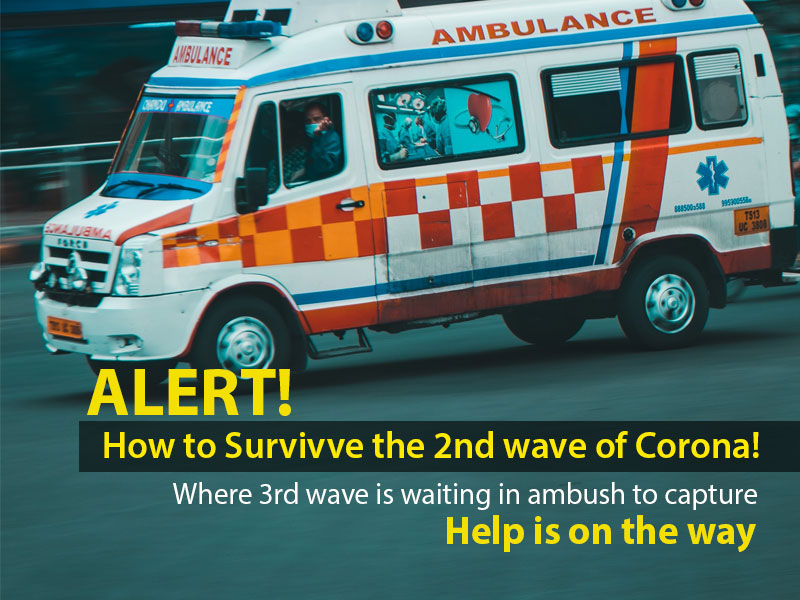
Surviving The 2nd Wave of Corona
‘This too shall pass away’ this famous Persian adage seems to be defeating us again and again in the case of COVID-19. Despite every effort