Author and Chief Executive Officer of Studio Dan, Danijah Taylor (centre), uses creative methods to engage young Jamaicans and encourage their interest in reading and writing.
Click to view more
Jamaica has recorded its first confirmed case of monkeypox.
Making the announcement during a virtual press conference on Wednesday (July 6), Minister of Health and Wellness, Dr. the Hon. Christopher Tufton, said the male patient who recently travelled from the United Kingdom is in isolation and is being treated.
“He presented to the public health system on July 5, having arrived on the island some five days earlier,” he said.
He informed that the close contacts of the person have been quarantined following contact tracing “which will continue if necessary”.
Dr. Tufton said the confirmation of the first case has triggered the country’s emergency protocols, which are in line with international health regulation protocols.
This, he said, includes the activation of the country’s Emergency Operations Centre.
“A review of all isolation facilities is to be done to look at the capacity to manage both monkeypox and COVID-19 [coronavirus],” he said.
The Minister further noted that the necessary health protocols, including surveillance, clinical management, lab management, as well as infection prevention and control, are being completed for the distribution to health teams islandwide.
He added that sensitisation of the health team and members of the public, which began more than a month ago, is being enhanced.
Meanwhile, Dr. Tufton said the confirmation of the virus locally is not reason for Jamaicans to panic or become fearful.
“Given what has transpired globally… up to this point, discovery of one case doesn’t make or create a crisis. It certainly creates concerns and, indeed, we did expect, that is the health authorities, that… given the presence of the monkeypox disease on the global landscape, given the openness of our country – we travel a lot for business or otherwise – that there was always the possibility of a case turning up here; a case or two.
“Having said that, we do believe we have the capacity to respond, and particularly if Jamaicans play their part, so I do not envision the kind of response to the novel coronavirus when it came in March 2020,” he said.
Dr. Tufton said maintenance of the COVID-19 protocols can help to reduce transmission of the monkeypox, which is usually mild to moderate.
“All members of the public should wear a mask ideally where you feel exposed normally in public, frequently wash hands and practise physical distancing, so the protocols are pretty similar to the COVID-19 virus,” he said.
Symptoms of the virus include fever, intense headache, swelling of the lymph nodes, back pain, muscle ache or general lack of energy or a rash. The incubation period is between five to 21 days.
He said persons experiencing any of these symptoms should call ahead before visiting their medical practitioner for examination and advice.
Chief Medical Officer, Dr. Jacquiline Bisasor-McKenzie said the Ministry will ramp up its communication campaign, “and of course, increasing the awareness of the clinical healthcare workers in order for them to be able to provide help to our clients, so we will be having increased awareness sessions for our healthcare providers as well,” she said.
She urged Jamaicans to educate themselves, so that they can increase their level of protection.
Dr. Bisasor McKenzie informed that the World Health Organization (WHO) report on the virus recorded approximately 3500 cases with only one fatality.
She noted, too, that Jamaica has the capacity to test for the virus through the support of the Pan-American Health Organization (PAHO).
The monkeypox virus is normally found in animals, but the disease may be transmitted from animals to humans. The virus is transmitted from one person to another by close contact with lesions, body fluids, respiratory droplets and contaminated materials such as bedding.
For further information contact the Ministry of Health and Wellness website at www.moh.gov.jm or contact a local public health department or reputable sites such as the WHO and PAHO.
Office:
58a Half Way Tree Road, Kingston 10
Jamaica, W.I
Tel:
1 (876) 926-3590-4
1 (876) 926-3740-6
Email: Send us your query
INTRODUCTION
Initial Officer Training Programme (IOTP) provides basic military officer training to Officer Cadets (OCdts) and their equivalents from law enforcement and uniformed services. The programme falls within the tactical level of the Professional Military Education (PME) framework of armed forces and is modelled from the Royal Military Academy Sandhursts’ (RMAS) Commissioning Course. It was designed with the direct support and guidance of RMAS Instructing and Support Staff.
Rationale
Traditionally, the Jamaica Defence Force’s (JDF) longstanding partnerships with militaries across the world has seen its OCdts being trained in academies in the following countries: United States, England, Canada, China and India. Upon the return of OCdts to the JDF, there is a requirement for doctrine and operating procedure standardization due to the varying concepts and differing contents of the training they had undergone. This is normally done at the Unit level and later, through a Young Officers’ Course. The advent of COVID-19 added a new level of complexity to travel, thus negatively affecting the process of sending OCdts overseas. Additionally, the ongoing expansion and restructuring of the Force to cauterize the ballooning threats to national security has caused an increased demand for newly commissioned Second Lieutenants.
Due to the carefully adapted military and academic curricula, IOTP serves as the course to treat with the aforementioned considerations. The methodology used addresses each issue directly and the course, through the delivery of a bespoke training syllabus, is fit for the JDF and is also relevant to the militaries and organizations within the Caribbean region and in other parts of the world.
Concept
Having the RMAS approach to training at its core, IOTP is designed with a syllabus that sees male and female integration throughout training. The course focusses on developing military skills and command with a leadership ‘golden thread’. The course structure allows the Instructing Staff to educate, build, develop and scrutinize an OCdt’s ability to decide and communicate accurately and ethically while under pressure and or stress. The expectation is that on commissioning, an OCdt will be fully cognizant of the responsibilities and personal conditions that being an Officer imposes upon them. The product of the IOTP will be an ethical and robust Officer who has the knowledge, skills, attitudes and intellectual agility to adapt their decision-making process and approach to any environment.
Location
The home of IOTP is the Caribbean Military Academy (CMA) Newcastle, which is located at the Newcastle Hill Station, St Andrew, Jamaica.
Nestled in the cool hills of upper St Andrew and amidst beautiful trees, ferns, ground orchids, delicate wild flowers and a profusion of ginger lilies, is the Newcastle
Training Depot founded in 1841 by Major General Sir William Maynard Gomm (later Field Marshall). Gomm, a veteran of the wars against revolutionary France and Lieutenant Governor of Jamaica from 1840 to 1841, relentlessly badgered the War Office in London to establish a mountain station for British soldiers in Jamaica soon after taking up his post.
The idea of the hill station was first raised by Gomm in a letter dated April 7, 1840 to Governor Sir Charles Metcalfe. Gomm pointed out that while Up Park Camp was an ideal location for a barracks, it was subject to the ravages of yellow fever. In Jamaica the
British garrison was stationed on the plain at Up Park Camp, Stony Hill, Fort Augusta and Port Royal. Here, on the average, 1 soldier died every 2½ days. According to Russell, the year 1838 was considered a ‘good’ year: only 91 men died. In 1839, 110 men perished and in the following year 121. Initially, the British government was conservative in approving a hill station for the troops in Jamaica. They were concerned about the expense of the venture.
In May 1841, London finally sanctioned Gomm’s efforts to build what is thought to be the first permanent mountain station in the British West Indies at Newcastle. The site selected was a coffee plantation protruding from the southern face of the grand ridge of the Blue Mountains. The British government paid £4,230 for the Newcastle site.
At the outbreak of World War II (1939-1945), life at Newcastle changed a little. The British regiment was replaced by Canadian regiments which remained at Newcastle for the duration of the war. With hostilities over in 1945, the Canadians left and once again a British battalion was stationed there.
In 1958, the West Indies Federation was founded and the infantry regiments of the various Caribbean islands were disbanded and reorganized into the West India Regiment. Newcastle became a training depot, training recruits from all over the West Indies as part of the
newly formed West Indies Federation. In 1962 when Federation was disbanded, the West India Regiment was also disbanded. Jamaica simultaneously sought her independence, which was achieved on August 6, 1962. With independence, Newcastle was given to the Jamaican government as part of a general settlement of all military lands in Jamaica.
Accessibility Tools
COVID-19
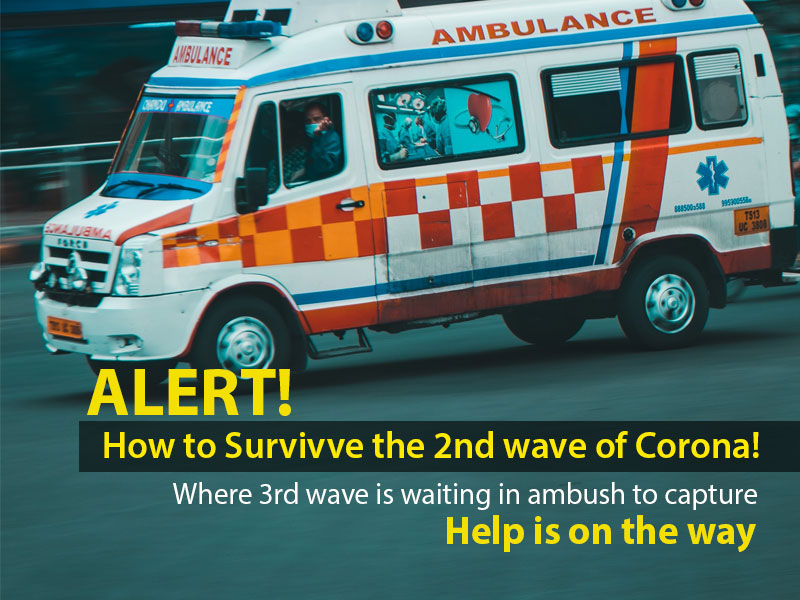
Surviving The 2nd Wave of Corona
‘This too shall pass away’ this famous Persian adage seems to be defeating us again and again in the case of COVID-19. Despite every effort