https://arab.news/4dfs4
DUSHANBE: Saudi Arabia has supported almost 1 million people throughout the Muslim world with charitable aid during Ramadan.
The King Salman Humanitarian Aid and Relief Center has distributed 911 Ramadan food baskets in several regions of Tajikistan, benefiting 6,705 individuals.
The initiative provides basic food needs to more than 51,000 people in need in Tajikistan during the blessed month.
The Saudi Ramadan “Eta’am” initiative is distributing 156,993 food baskets weighing 8,430 tons in 19 countries, benefiting more than 900,000 people during Ramadan.
KSrelief has handed more than 100 tons of dates as a gift from Saudi Arabia to Pakistan.
The aid was given to Pakistani officials by the Saudi ambassador to Pakistan, Nawaf bin Saeed Al-Malki.
The center also offered 50 tons of dates as a gift to Djibouti..
Meanwhile, the Ministry of Islamic Affairs, Dawah and Guidance, through the Saudi Embassy in Vietnam, distributed Ramadan baskets as part of the King Salman iftar program, implemented by the ministry in 34 countries.
The baskets were distributed in the Cambodian governorate of Bentai Mangai to about 3,234 beneficiaries.
KSrelief distributed more than 16 tons of food baskets to people in need in the Al-Buraiqeh district in the Yemeni governorate of Aden, benefiting 900 people.
The center also handed out 2,000 food baskets to needy families in Bangladesh, benefiting 10,000 people.
These are all part of relief and humanitarian projects being implemented by the government of King Salman, represented by KSrelief, in many developing countries.
RIYADH: Saudi Arabia is accelerating the pace of innovation in various sectors but the health sector is receiving more attention than others, with experts and specialists agreeing on the significance of innovation to achieve optimization, cost reduction, and sustainability.
The Saudi Council of Ministers approved the establishment of the Research, Development, and Innovation Authority in 2010, and the country has risen significantly in the Global Innovation Output Index in recent years. It moved from 85th in 2019 to 77th in 2020 and was 66th in 2021.
Abdulaziz A. Alsheikh, the co-founder of Spectropharma, said innovation in the health sector was critical to addressing and resolving the challenges confronting the sector’s workers on the one hand and its user market on the other.
Support, innovation, and flexible alignment toward the best innovation underpinned industry-leading health systems, enhancing the quality of life and the future of healthcare, he added.
The growth of innovation in healthcare and quality of life depended on specialists, creators, talent, and investors in engineering, information systems, and other sciences.
He explained that medical device and pharmaceutical development, business model development, design and manufacturing solutions, and apps related to smart healthcare, were all examples of how innovation in the health sector addressed the challenges the industry was expected to face.
There were alliances and competition in many sectors in Saudi Arabia to stimulate innovation in many fields. This movement would strengthen the Kingdom’s role in competitiveness by “focusing on research and then adopting, issuing, and enabling the best innovations,” he said.
Alsheikh believed the most current important innovative trends were those that contributed to the transformation of the public health sector, such as lowering healthcare costs, improving patient care quality through the integration of modern technology in communication, diagnosis and treatment using analytical data, and increasing readiness for disease prevention and surveillance.
“There is no universally accepted definition of creativity and innovation,” said Mohammed Al-Ghazal, the founding CEO of Noor Energies. “As a result, it is open to interpretations ranging from artistic expression to problem-solving abilities in the context of long-term economic and social development.”
Al-Ghazal, an award-winning digital entrepreneur and inventor, said that business incubators were one of the most effective and successful ecosystems invented in recent decades to accelerate the implementation of economic and technological development programs, create new jobs, and had been deployed in developed and developing countries.
“The significance of business incubators has emerged to pay attention and provide small and medium-sized enterprises with all of the ingredients they require to succeed and continue to embody ideas on the ground and turn them into marketable products.”
There is a high demand in the government and private sector to establish innovation departments or support their employees in seizing the culture of innovation. Innovation has become an urgent necessity for the success of government and private sector development to achieve the goals of the Kingdom’s Vision 2030.
Vision 2030 wants the Kingdom to be among the top 10 countries in the Global Competitiveness Index by 2030.
Two key components of the index are directly related to research and development and the Kingdom can only improve on them by increasing its competitiveness in research and innovation, and by achieving the presence of at least five Saudi universities in the world ranking of the top 200 universities.
This goal demands high-quality research and influence in the Kingdom’s universities, stimulating collaboration between universities, business incubators, and innovators.
Al-Ghazal said these objectives could be met by supporting research and innovation efforts at universities and across national industries in ways that contributed to stimulating research, knowledge production, social development, economic development, and private sector participation.
Abdullah Alyousef, CEO at software firm ALIA ICT, said that technological advancement and innovation could play a critical role in reimagining the potential of various sectors, from healthcare and communications to agriculture, and their ability to leverage technology to make a positive impact on society and mitigate significant problems.
One of the most critical elements of digital transformation success was empowering people to work in new ways, preparing the workforce for the future, and training them to adapt to the new realities of the world and the industries in which they operated, Alyousef said. This meant providing training opportunities, honing employee skills, and engaging all business units actively to ensure that businesses continued to be driven by innovation and digital updates.
Saudi Arabia has grand ambitions for the future. In addition to overcoming some legal and administrative obstacles, Vision 2030 seeks to increase the contribution of small and medium-sized enterprises to the economy by facilitating their access to finance and encouraging financial institutions to allocate up to 1 percent of total financing to SMEs by the same time, he added.
He said the contribution of small and medium-sized enterprises to the economy in some countries, such as the UK and the US, typically reached 70 percent, emphasizing the significance of the development and growth of small and medium-sized enterprises and startups.
There were numerous innovative trends in which to invest, including products, services, business models, processes and technology, the environment, and marketing.
He added that the Kingdom had a real incentive for innovation and entrepreneurship – and a large number of young people eager to make a difference. “These young people are eager to leave their mark and have a direct and positive impact on the country’s future. All of our innovation programs are expanding.”
Successful innovation allowed adding value to the business so that profits could be increased. “If you don’t innovate well, your business will stabilize,” said Mohammad Sabbah, a business development specialist. “Innovation helps to stay ahead of the competition, which is important in a globalized and rapidly changing market.”
He did not believe that innovation should be affected by market research before launching new products. Instead, it relied on the so-called “trial and error correction” method. It pushed innovative products to market quickly and then began to modify them based on customer reactions and the continuous development approach.
He said that innovation differed from one institution to another and from one character to another, so the process of applying it and evaluating its results also differed. Realizing ideas was as important as creating them, so the team responsible for realizing the idea should develop a detailed work plan for measurement that included everything required to implement the idea, such as cost estimates and time.
Sabbah said innovation was not limited to a particular idea, so removing an unnecessary or redundant step in the current process or eliminating an unnecessary feature in the current product fell in this direction. He referenced a Japanese saying about how a dwarf could see farther than a giant if he climbed over his shoulders.
He stressed that creating a conducive institutional, legislative, and technological environment for innovation in the health sector was essential. In his opinion, these elements worked together to create a fertile ground for new ideas, promoting the development of pharmaceutical and biotechnology industries, and working with strategic partners to develop the medical research sector for the treatment of prevalent diseases.
He said that because of the current reliance on data and data analysis to improve diagnostics and treatment in Saudi Arabia, it was clear that the sector had a bright future. A flurry of activity in the sectors targeted for innovation was also helping to empower society by promoting healthier lifestyles and better mental health, which were both essential for a healthy and psychologically sound society.
RIYADH: Diriyah Gate Development Authority was recognized globally during the Heavent Awards for the royal inauguration event of the birthplace in the Kingdom.
“To receive this global award in such a prestigious field makes me incredibly proud. I dedicate this honor to the staff at DGDA and [Executive Visions Inc.] who were integral in making it happen,” Jerry Inzerillo, DGDA Group CEO said.
DGDA partnered with EVI to inaugurate the first brick being laid to preserve the UNESCO-inscribed heritage site of Diriyah.
A ceremony was held in Paris on April 21 where representatives from DGDA and EVI accepted the award. The Heavent Awards is a globally recognized ceremony celebrating the achievements of international events.
“Witnessing our vision being brought to life creatively by EVI and then seeing it being delivered through hours of work by everyone involved — from construction, design, and logistics to communications and guest services — was immensely rewarding for me personally,” Inzerillo said.
The event marked the inauguration of the $50.6 billion project to preserve the birthplace of the First Saudi State and develop Diriyah as a global tourist destination.
DGDA aims to transform 14 square kilometers of Diriyah into one of the world’s foremost historic tourism destinations.
“To lead a project like Diriyah is both a wonderful privilege and a huge responsibility. I knew that, as we laid the first foundation stone at Diriyah soon after Saudi Arabia had opened its doors to the world, we had the expectation of a Kingdom on our shoulders,” Inzerillo said.
In November 2019, the royal inauguration was attended by King Salman and Crown Prince Mohammed bin Salman.
“We had to create an event that was befitting of such a historic moment and did justice to the high ambition of the Custodian of the Two Holy Mosques King Salman bin Abdulaziz and His Royal Highness the Crown Prince Mohammed bin Salman, whose wisdom and foresight guide us every day,” the DGDA CEO highlighted.
The royal inauguration consisted of multiple aerial props, live performances, complex 3D projections on a 350-meter mudbrick wall, a firework show, and a 100-piece symphony orchestra.
“To tell a story of this magnitude through the lens of broadcast in a UNESCO World Heritage site where the history of Saudi Arabia and the Arabian Peninsula were born was a true honor,” Inzerillo said.
“We couldn’t be more thrilled at the global recognition of this event,” he added.
The main segment of the inauguration consisted of a 38-minute film with an original score exclusively produced for the event.
“We at EVI and all of our extended teams around the world from over 50 nationalities were privileged to serve DGDA under the leadership of His Excellency Ahmed Al-Khateeb, minister of tourism, and Group CEO Jerry Inzerillo,” Michael Marto, executive chairman and CEO of EVI, said.
DGDA was established in July 2017 to preserve Diriyah’s history and build the Kingdom’s birthplace into a global hub for tourism. DGDA aims to create an environment that enhances Diriyah’s historical and cultural values while embracing and welcoming modern tourism.
RIYADH: Umrah travel operators in Riyadh have doubled the price of the pilgrim’s tour package from the regular price of SR110 ($30) to SR200 for each person, and this will triple in anticipation of a heavy rush during the Ramadan season.
This will further increase to SR300 during the Qiyam Al-Layl, the last ten days of the holy month, said tour operators in the Saudi capital.
“The huge rush was due to the holy month of Ramadan since most of the people want to spend these days in the holy cities of Makkah and Madinah,” a leading Umrah operator in the city told Arab News.
“The hike in the package prices is due to the rush of pilgrims during Ramadan,” said the operator. They also cited an increase in VAT to 15 percent as one of the reasons for soaring prices this year.
Umrah package prices rise every year during the month of Ramadan. Before the coronavirus pandemic, it used to increase up to SR200 till 2019. In 2020 and 2021, the rush was limited due to the COVID-19 restrictions, but with things back to normal this year the Umrah package prices soared up to SR300 due to the rush of pilgrims.
Over 3 million Saudi nationals and 3.4 million non-Saudis performed Umrah in 2021.
Worshipers and Umrah pilgrims returned to the courtyards of the Grand Mosque in Makkah in full capacity last month after Saudi authorities announced the lifting of COVID-19 precautionary measures and the return to normalcy in the Kingdom.
The General Presidency of the Grand Mosque and the Prophet’s Mosque has reactivated its operational plans for full-capacity worship, with its field teams removing social distancing stickers.
Worshipers stood shoulder-to-shoulder in spiritual scenes after the end of social distancing measures for prayers and tawaf.
These preparations by the General Presidency of the Grand Mosque and the Prophet’s Mosque came ahead of the holy month of Ramadan.
Mohammed Wakil Ahmed, a faculty member at King Saud University who went for Umrah with his family last Thursday, told Arab News: “The travel operators are now charging SR200 per person for a Thursday to Saturday Umrah trip as against SR100 to SR110 before the Ramadan season.”
The weekend packages for trips to Makkah and Madinah start at 4 p.m; from Riyadh on Thursday and finish at midnight on Saturday, he said.
He added that each family is given a large room, while single men must share a room with three other pilgrims.
There are about 100 Umrah travel operators spread throughout the capital, with a concentration of them in Hai Al-Wizarat and Batha districts.
Arab News went to various tour operators to check Umrah package prices. Anwar Badr Travel was charging SR250 for last week’s trip and SR300 for this week, Al-Saria said they charged SR230 for last week and SR280 to SR300 for this week, Al-Jiad travel said they charged SR190, SR230 for the weekend trip last week and SR280 for this week, while Al-Rushd travel charged SR250 for last week and SR300 for this week.
Rates tend not to vary greatly among Umrah tour operators in Riyadh. Buses leave from Hai Al-Wizarat and Batha districts with stops at the central bus terminal so that authorities can take a tally of the number of pilgrims.
During the journey, coaches stop at three points for Maghreb prayers, Isha prayers, and for dinner. Pilgrims change into their ihram at Meeqat in Taif, where they are given half an hour to don their ihrams at the Meeqat point, and they can perform Fajr prayers in the holy city of Makkah.
There are ample mosques, food outlets and boutiques along the routes from Riyadh to Makkah.
Flights from Riyadh to Jeddah are also filling up. According to a leading airline ticketing company in Riyadh, air ticket prices also spiked and ranged between SR1,500 to SR2000.
There are comparatively cheaper tickets for odd timings, but they too will total around SR1,000, operators said.
JEDDAH: In the four years since the resumption of movie screening across Saudi Arabia, the country has experienced an explosion of investment, filmgoing and box-office takings, establishing it as West Asia’s foremost cinema market.
Box office revenues in the MENA region as a whole are expected to grow by 4 percent compound annual rate to $1 billion between 2019 and 2024, compared with a 2.4 percent decline worldwide, according to data from market tracker Ventures ONSITE.
This regional growth is mainly due to the creation of a sizable new market following the resumption of movie screening in April 2018 after a decades-long ban. The Kingdom far outstrips its neighbors in market size, revenue per user, and growth rate.

Revenues in the Kingdom are expected to show an annual growth rate of 27.68 percent resulting in a projected market volume of $100 million by 2024, while the average revenue per user is expected to amount to $50.04.
This compares favorably with the UAE, which already has a very well-established cinema industry, where revenues are expected to show a smaller annual growth rate of 7.68 percent resulting in a projected market volume of $37 million by 2024 and an average revenue per user of $34.56.
Outside the Gulf region, market growth is forecast to be far smaller. In Egypt, revenues are expected to show an annual growth rate of 13.56 percent resulting in a projected market volume of $12 million by 2024 and an average revenue per user of $6.89.
For crisis-hit Lebanon, meanwhile, revenues are expected to show an annual growth rate of 7.58 percent resulting in a projected market volume of $4 million by 2024 and an average revenue per user of $12.21.
The lifting of the prohibition on cinema was first announced by Crown Prince Mohammed bin Salman in 2017 as part of the Vision 2030 reform agenda, with a view to improving overall quality of life and diversifying the economy away from oil.
If the revenues alone are anything to go by, the policy shift has been a resounding success. Since cinemas officially reopened, box office sales have exceeded 30.8 million tickets, the Saudi Press Agency reported on April 18.
56 Theaters licensed in 20 cities since resumption of movie screening.
4,439 Jobs created for young Saudi men and women in the sector.
2,600 Screens expected to come up in the Kingdom by 2030.
$950m Projected box office revenue in the Kingdom in 2030.
In 2021 alone, the industry saw box office-market grow to $238 million — a 95 percent increase over the previous year’s takings of $122 million — far outstripping the UAE’s 2021 total of $130 million, according to a recent report in Variety magazine.
Several analysts believe Saudi Arabia is on pace to become a billion-dollar movie market in the next few years. The professional services network PwC estimates the Kingdom’s industry could be worth $950 million in 2030.
Taking into account non-admission revenues, including advertising and concessions like food and beverages that typically comprise 35 percent of overall takings, the sector could generate $1.5 billion in 2030.
Meanwhile, the General Commission for Audiovisual Media, one of the governing authorities established to regulate and operate cinemas in the Kingdom, estimates there will be 2,600 movie screens in Saudi Arabia by 2030 in an industry worth around $1.2 billion.
According to the Film Commission, a Saudi government body affiliated with the Ministry of Culture, established in February 2020, the sector has already created jobs for 4,439 young Saudis, fulfilling a core goal of the Kingdom’s Vision 2030 reform agenda.
Variety magazine confirmed in a November 2020 report, citing figures released during the META Cinema Forum exhibitors’ conference, that Saudi Arabia had overtaken the UAE to become the region’s top-grossing territory, with more than $73 million in theatrical movie ticket sales over the past 40 weeks — a roughly $2 million increase in box office returns compared with the same period in 2019.
The UAE during the same period in 2020 had generated about $51 million, roughly a quarter of its 2019 box-office takings , the magazine said.
“We believe that Saudi Arabia is the only cinema market globally to have expanded in 2020,” Cameron Mitchell, CEO of prominent Middle East exhibitor VOX Cinemas, was quoted by Variety as saying. This despite the fact that, due to the pandemic, cinemas were shuttered in the Kingdom between March and the middle of June.
Mitchell said that as a theatrical market, the Middle East in 2019 was worth $600 million, of which Saudi accounted for a $110 million share and the UAE roughly $250 million.
Much of Saudi Arabia’s remarkable box-office success in the space of just four years is attributable to the huge investments the Kingdom has seen in the form of multiplex cinemas.
Under Vision 2030, the Kingdom aims to attract domestic and international investors, increase household spending on entertainment from 2.9 percent to 6 percent, and develop a market worth SR30 billion ($1.9 billion) in recreational services.
In April 2018, coinciding with the resumption of movie screening, the Kingdom’s Development Investment Entertainment Company opened its first cinema in the King Abdullah Financial District in Riyadh.
Since then, 56 theaters with 518 screens have been licensed in 20 cities, according to the Film Commission. In that time, 1,144 movies in 22 languages from 38 countries have been shown, including 22 Saudi films.
According to a recent Variety magazine report, citing data from US marketing analysis firm Comscore, the number of multi-screen movie theaters in Saudi Arabia grew from 33 locations at the start of 2021 to 53 venues by December 2021 — an increase of 20 new locations.
With Saudi Arabia’s population forecast to be 39.5 million by 2030, analysts believe the Kingdom has the potential to absorb up to 2,600 screens.
1. “Waafet Reggaala,” Empire, $15.08 million
2. “Spider-Man: No Way Home,” Sony, $11.2 million
Depending on how rapidly the Kingdom’s market evolves, it could potentially generate 60 to 70 million admissions in 2030.
Saudi-owned Muvi Cinemas operates the highest number of local cinemas, followed by (Dubai-based) VOX Cinemas, US theater chain AMC, the world’s largest cinema operator, Lebanon’s Empire Cinema, and Mexican-owned Cinepolis.
Prior to the pandemic, VOX set out plans to invest $533 million in the Kingdom to open 600 screens, including at least four multiplexes in partnership with IMAX, creating 3,000 new jobs over a period of five years.
Cinepolis and Al-Tayer Group have partnered with Al-Hokair Group, while iPic Entertainment is exploring opportunities with BAS Global Investments Company to develop 25 to 30 sites over the coming decade.
Meanwhile, India’s PVR Limited is exploring options with the UAE-based Al-Futtaim Group, while CJ 4DPLEX has signed a deal with Cinemacity.
Kuwait National Cinema Company and Dubai-based distributor Front Row Filmed Entertainment expect to develop 12 multiplexes through their subsidiary Cinescape, while Al-Rashed Empire Cinema consortium has received a license to enter the Kingdom’s marketplace.
Infrastructure and investment are not the only reasons for the Saudi success story. Understanding the audience and knowing what films to screen has also been integral.
Around one third of Saudi Arabia’s total population is made up of expatriates, including 3 million Indians, concentrated in the provinces of Riyadh and Makkah.
Market analysts say a strategy that offers filmgoers a mix of Hollywood, regional, Bollywood and local content is a surefire way to pull audiences into cinemas.
To cater for such a broad array of tastes and interests, some 340 new feature films were released into Saudi cinemas in 2021 alone — up from 222 in 2020.
Of course, what Saudi officials would like to see in the coming years is homegrown movies making the top box-office rankings.
MAKKAH: Sheikh Dr. Abdulrahman Al-Sudais, president of the General Presidency for the Affairs of the Two Holy Mosques, launched a wristbands for children initiative, with communication data of relatives inscribed to make it easier for authorities to communicate quickly with parents.
The initiative will distribute bracelets to children accompanying their parents to perform Umrah in case they get lost in crowds at the Grand Mosque. 
The undersecretary-general for social and voluntary services, Amjad bin Ayed Al-Hazmi, said the presidency is keen to provide the best services to the Grand Mosque’s visitors.
Meanwhile, the presidency distributed nearly 7,000 umbrellas to Umrah performers and visitors to the Grand Mosque. This initiative “Your Umbrella is in Your Hands” comes to protect Umrah performers from the heat of the sun during Tawaf, and employees who serve the worshippers.
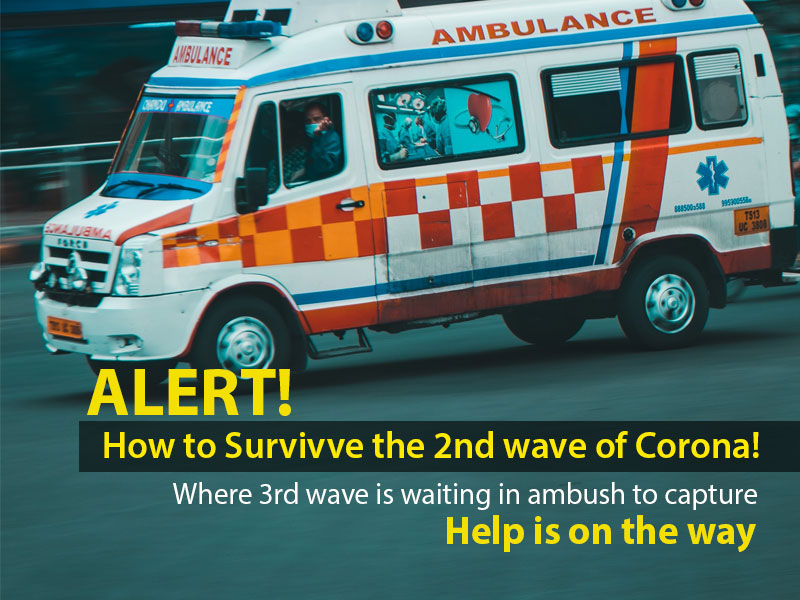
COVID-19
Surviving The 2nd Wave of Corona
‘This too shall pass away’ this famous Persian adage seems to be defeating us again and again in the case of COVID-19. Despite every effort